





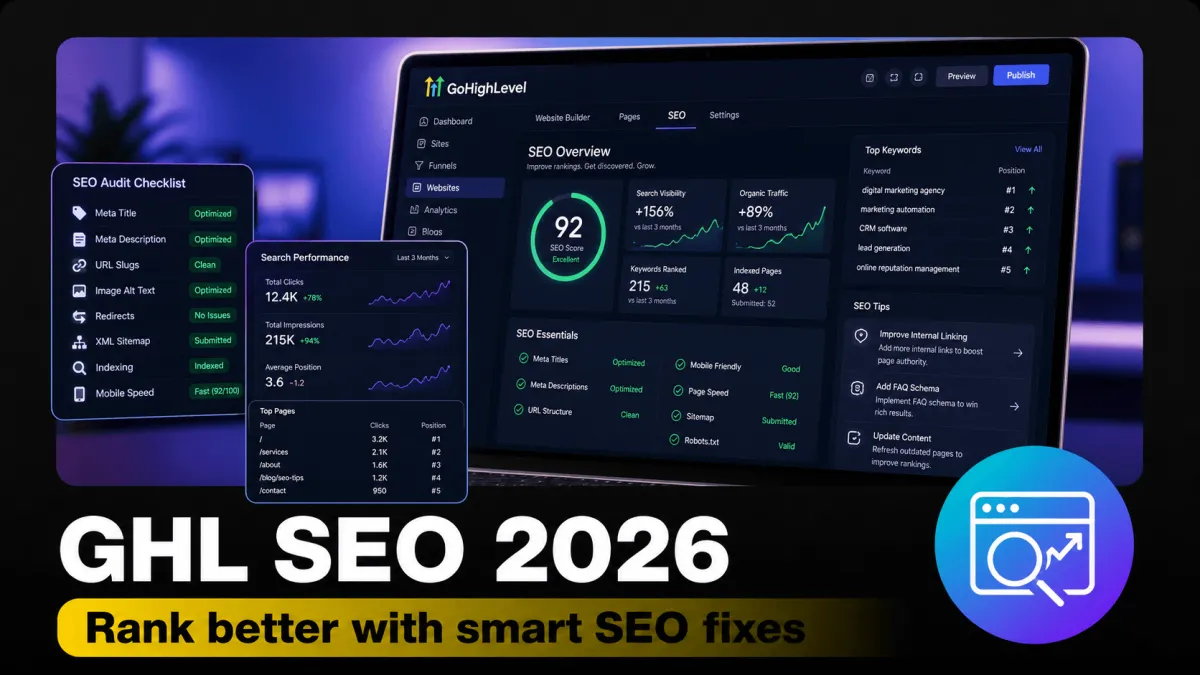
Are GHL Websites Good for SEO in 2026?
GoHighLevel (GHL) has become a go‑to platform for agencies and small businesses that want funnels, automation, and websites in one place. But when organic traffic matters, one question always comes up: are GHL websites actually good for SEO in 2026? Let’s unpack what the platform does well, where it falls short, and how to fix the most common issues so your GHL site can rank competitively.
1. Are GHL Websites Good for SEO?
The honest answer: GHL websites are “SEO-capable,” not “SEO-optimized by default.” The platform gives you the basics—editable meta titles and descriptions, custom URL slugs, image alt text, and page‑level settings for sites, funnels, and blog posts (gohighlevel.ai). That means you can build pages that rank, especially for local and niche terms.
However, GHL does not include many of the tools serious SEO campaigns rely on: keyword research, backlink analysis, rank tracking, or deep technical audits. You’ll still need external platforms like Google Search Console, Ahrefs, SEMrush, or Screaming Frog to diagnose and monitor performance. In other words, GHL is a solid website and funnel builder, not a complete SEO suite.
From a search engine’s perspective, a well‑built GHL site can absolutely compete—if you handle the technical details, content quality, and user experience that modern SEO demands in 2026 (Search Engine Journal, Moz).
2. Common GHL SEO Issues (and Why They Matter)
Before we talk solutions, it helps to understand the specific pain points users run into on GHL that can quietly undermine rankings and traffic.
URL instability and duplicates: GHL auto‑generates slugs from page names. Renaming pages can change URLs, creating broken links or duplicate versions like
/service,/service-1, and/service-2(e2msolutions.com).Weak or missing metadata: Because GHL doesn’t enforce meta titles and descriptions, many pages go live with generic text or nothing at all, which hurts click‑through rate and relevance.
Funnel indexing problems: Funnel steps can remain unindexed if they’re unpublished, blocked, or misconfigured, so key landing pages never appear in search results (consultevo.com).
Lack of built‑in audits: Without native crawl or error reporting, issues like broken links, slow pages, or duplicate content can go unnoticed.
📌 Key Takeaway: GHL rarely “breaks” SEO on its own—most problems come from rushed setups, missing checks, and no external monitoring.
3. Practical Solutions: How to Make GHL Websites SEO-Friendly
A. Stabilize URLs and Protect Link Equity
Start by treating your URLs as permanent assets:
Manually set “clean” slugs for every important page using short, keyword‑rich phrases (for example, /dental-implants-chicago instead of /page-1234).
If you must change a URL, immediately add a 301 redirect in Settings → URL Redirects so any old links or bookmarks pass their authority to the new address (e2msolutions.com).
B. Enforce Metadata and Social Tags
Create a simple launch checklist for every new GHL page or funnel step:
Unique, keyword‑focused title tag (about 50–60 characters).
Compelling meta description that reads like an ad (around 140–160 characters).
Descriptive image alt text that explains what’s on the page, not just “image‑1.”
Where possible, add Open Graph and Twitter Card tags so your pages look great when shared on social media—this can indirectly boost SEO through higher engagement and brand searches.
C. Fix Funnel Indexing and Visibility
Many businesses build entire customer journeys inside GHL funnels, then wonder why those pages never show up on Google. To fix this:
Confirm each important step is published and publicly accessible (no password or login wall for top‑of‑funnel content).
Check that your site or funnel is included in your XML sitemap and that the sitemap is submitted to Google Search Console (GSC).
In GSC, use URL Inspection → Request Indexing to nudge Google to crawl new or updated pages (consultevo.com).
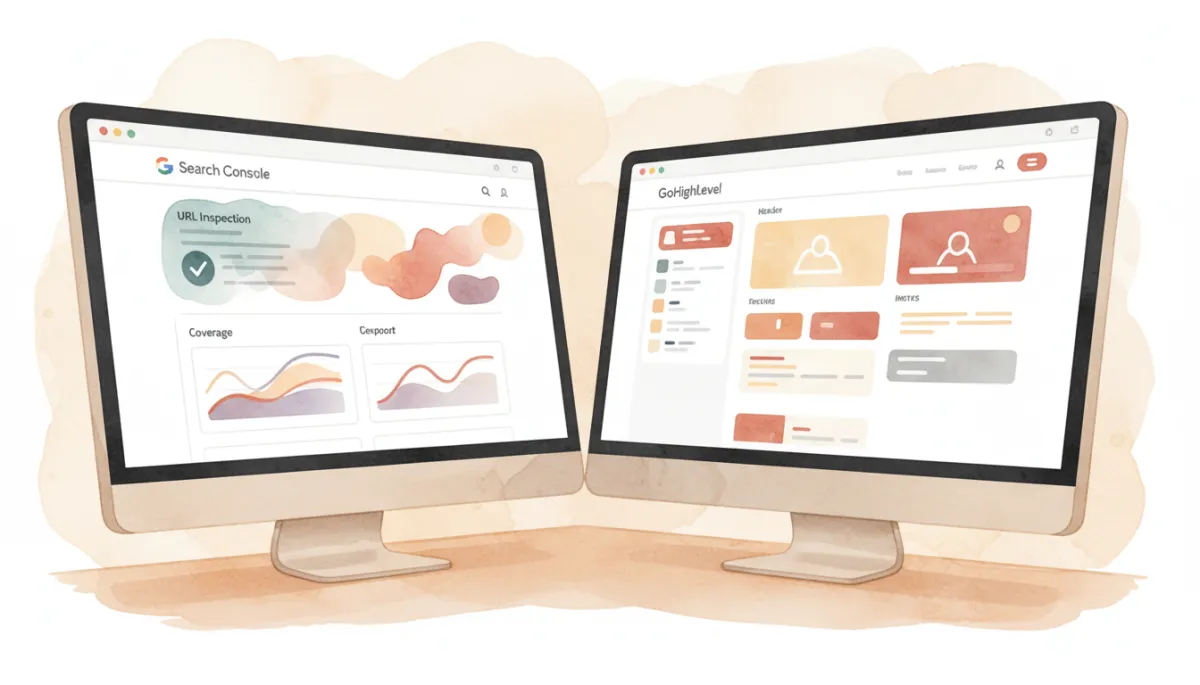
Pair GSC with GHL to catch indexing issues early and protect organic growth.
D. Use GHL’s SEO Add‑Ons and External Tools Together
If you’re using HighLevel WordPress Hosting, the built‑in SEO Report tab can quickly flag missing or weak metadata and even apply one‑click fixes via the WordPress editor, as long as you have an active SEO subscription and the latest LC WordPress plugin installed (help.gohighlevel.com).
For non‑GHL sites you manage, the newer SEO Pixel lets you drop a script on external domains and receive AI‑powered recommendations for titles, descriptions, and image alt text, all managed from your GHL dashboard (ideas.gohighlevel.com).
Even with these tools, you should still rely on external platforms—Google Analytics, Search Console, and third‑party crawlers—to monitor Core Web Vitals, mobile performance, and technical health, which are central to SEO in 2026 (Search Engine Journal, Moz).
E. Don’t Forget Content, UX, and Local SEO
No platform can compensate for thin content or poor user experience. To make your GHL site truly competitive:
Publish original, helpful content that answers real questions, including conversational, long‑tail queries for voice search.
Keep pages fast and mobile‑friendly with clean layouts, compressed images, and minimal clutter—critical for Core Web Vitals and rankings in 2026.
For local businesses, pair your GHL site with an optimized Google Business Profile and consistent local citations to win local search.
💡 Pro Tip: Treat GHL as your conversion engine and your SEO content hub at the same time—well‑structured, in‑depth pages convert better and rank better.
4. How to Fix Existing SEO Issues on a Live GHL Site
If your GHL website is already live and underperforming, use this simple repair roadmap:
Audit your pages: Crawl the site with a tool like Screaming Frog or Sitebulb to spot missing titles, duplicate content, broken links, and redirect chains.
Map and fix URLs: List all important URLs, identify duplicates, and consolidate them with 301 redirects from weaker variants to the best‑performing version.
Rewrite metadata: Go page by page in GHL and improve titles and descriptions using real keyword data from your SEO tools.
Prioritize UX fixes: Clean up navigation, simplify funnels, and remove unnecessary steps that cause drop‑offs—this helps both conversions and SEO signals like dwell time.
Monitor and iterate: Track rankings, traffic, and engagement in Google Analytics and Search Console, then refine content and internal linking based on what’s working.
Final Verdict: Are GHL Websites Good for SEO?
GHL websites are as good for SEO as the strategy behind them. The platform provides enough control to build search‑friendly pages, but it won’t do the hard work for you. When you stabilize URLs, enforce metadata, fix indexing, and pair GHL with proper SEO tools and best practices, your site can perform strongly in organic search—even in an AI‑driven, user‑experience‑focused landscape like 2026.
If you treat GHL as a flexible canvas and layer on disciplined SEO processes, you transform it from “just a funnel builder” into a reliable source of long‑term, compounding organic traffic.